
Tony Hoagland
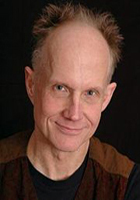

Tony Hoagland Poems
If you are lucky in this life,
you will get to help your enemy
the way I got to help my mother
when she was weakened past the point of saying no.
...
Maxine, back from a weekend with her boyfriend,
smiles like a big cat and says
that she's a conjugated verb.
She's been doing the direct object
...
Sometimes I wish I were still out
on the back porch, drinking jet fuel
with the boys, getting louder and louder
as the empty cans drop out of our paws
...
The season turned like the page of a glossy fashion magazine.
In the park the daffodils came up
and in the parking lot, the new car models were on parade.
...
Cold wind comes out of the white hills
and rubs itself against the walls of the condominium
with an esophogeal vowel sound,
and a loneliness creeps
into the conversation by the hot tub.
We don't deserve pleasure
just as we don't deserve pain,
but it's pure sorcery the way the feathers of warm mist
keep rising from the surface of the water
to wrap themselves around a sculpted
clavicle or wrist.
It's not just that we are on
the eighth story of the world
looking out through glass and steel
with a clarity of vision
in which imported coffee and
a knowledge of French painting
are combined,
but that we are atop a pyramid
of all the facts that make this possible:
the furnace that heats the water,
the truck that hauled the fuel,
the artery of highway
blasted through the mountains,
the heart attack of the previous owner,
the history of Western medicine
that failed to save him,
the successful development of tourism,
the snow white lotions that counteract the chemistry
of chlorine upon skin—our skin.
Down inside history's body,
the slaves are still singing in the dark;
the roads continue to be built;
the wind blows and the building grips itself
in anticipation of the next strong gust.
So an enormous act of forgetting is required
simply to kiss someone
or to open your mouth
for the fork of high-calorie paté
someone is raising to your lips,
which, considering the price,
it would be a sin
not to enjoy.
...
November like a train wreck -
as if a locomotive made of cold
had hurtled out of Canada
and crashed into a million trees,
...
There are people who do not see a broken playground swing
as a symbol of ruined childhood
and there are people who don't interpret the behavior
of a fly in a motel room as a mocking representation of their thought process.
...
Then one of the students with blue hair and a tongue stud
Says that America is for him a maximum-security prison
...
My marriage ended in an airport long ago.
I was not wise enough to cry while looking for my car,
walking through the underground garage;
jets were roaring overhead, and if I had been wise
I would have looked up at those heavy-bellied cylinders
and seen the wheelchairs and the frightened dogs inside;
the kidneys bedded in dry ice and Styrofoam containers.
I would have known that in synagogues and churches all over town
couples were gathering like flocks of geese
getting ready to take off, while here the jets were putting down
their gear, getting ready for the jolt, the giant tires
shrieking and scraping off two
long streaks of rubber molecules,
that might have been my wife and I, screaming in our fear.
It is a matter of amusement to me now,
me staggering around that underground garage,
trying to remember the color of my vehicle,
unable to recall that I had come by cab—
eventually gathering myself and going back inside,
quite matter-of-fact,
to get the luggage
I would be carrying for the rest of my life.
...
Windy today and I feel less than brilliant,
driving over the hills from work.
There are the dark parts on the road
...
There is no single particular noun
for the way a friendship,
stretched over time, grows thin,
...
I was feeling pretty religious
standing on the bridge in my winter coat
looking down at the gray water:
...
We had been married for six or seven years
when my wife, standing in the kitchen one afternoon, told me
that she screams underwater when she swims—
that, in fact, she has been screaming for years
into the blue chlorinated water of the community pool
where she does laps every other day.
Buttering her toast, not as if she had been
concealing anything,
not as if I should consider myself
personally the cause of her screaming,
nor as if we should perform an act of therapy
right that minute on the kitchen table,
—casually, she told me,
and I could see her turn her square face up
to take a gulp of oxygen,
then down again into the cold wet mask of the unconscious.
For all I know, maybe everyone is screaming
as they go through life, silently,
politely keeping the big secret
that it is not all fun
to be ripped by the crooked beak
of something called psychology,
to be dipped down
again and again into time;
that the truest, most intimate
pleasure you can sometimes find
is the wet kiss
of your own pain.
There goes Kath, at one PM, to swim her twenty-two laps
back and forth in the community pool;
—what discipline she has!
Twenty-two laps like twenty-two pages,
that will never be read by anyone.
...
Don't take it personal, they said;
but I did, I took it all quite personal—
the breeze and the river and the color of the fields;
the price of grapefruit and stamps,
the wet hair of women in the rain—
And I cursed what hurt me
and I praised what gave me joy,
the most simple-minded of possible responses.
The government reminded me of my father,
with its deafness and its laws,
and the weather reminded me of my mom,
with her tropical squalls.
Enjoy it while you can, they said of Happiness
Think first, they said of Talk
Get over it, they said
at the School of Broken Hearts
but I couldn't and I didn't and I don't
believe in the clean break;
I believe in the compound fracture
served with a sauce of dirty regret,
I believe in saying it all
and taking it all back
and saying it again for good measure
while the air fills up with I'm-Sorries
like wheeling birds
and the trees look seasick in the wind.
Oh life! Can you blame me
for making a scene?
You were that yellow caboose, the moon
disappearing over a ridge of cloud.
I was the dog, chained in some fool's backyard;
barking and barking:
trying to convince everything else
to take it personal too.
...
Yes, the young mothers are beautiful,
with all the self-acceptance of exhaustion,
still dazed from their great outpouring,
pushing their strollers along the public river walk.
And the day is also beautiful—the replica 19th-century paddle-wheeler
perpetually moored at the city wharf
with its glassed-in bar and grill
for the lunch-and-cocktail-seekers
who come for the Mark Twain Happy Hour
which lasts as long as the Mississippi.
This is the kind of town where the rush hour traffic halts
to let three wild turkeys cross the road,
and when the high school music teacher retires
after thirty years
the movie marquee says, "Thanks Mr. Biddleman!"
and the whole town comes to hear
the tuba solos of old students.
Summer, when the living is easy
and we store up pleasure in our bodies
like fat, like Eskimos,
for the coming season of privation.
All August the Ferris wheel will turn
in the little amusement park,
and screaming teenage girls will jump into the river
with their clothes on,
right next to the No Swimming sign.
Trying to cool the heat inside the small towns
of their bodies,
for which they have no words;
obedient to the voice inside which tells them,
"Now. Steal Pleasure."
...
Just past the bin of pastel baby socks and underwear,
there are some 49-dollar Chinese-made TVs;
one of them singing news about a far-off war,
one comparing the breast size of an actress from Hollywood
to the breast size of an actress from Bollywood.
And here is my niece Lucinda,
who is nine and a true daughter of Texas,
who has developed the flounce of a pedigreed blonde
and declares that her favorite sport is shopping.
Today is the day she embarks upon her journey,
swinging a credit card like a scythe
through the meadows of golden merchandise.
Today is the day she stops looking at faces,
and starts assessing the labels of purses;
so let it begin. Let her be dipped in the dazzling bounty
and raised and wrung out again and again.
And let us watch.
As the gods in olden stories
turned mortals into laurel trees and crows
to teach them some kind of lesson,
so we were turned into Americans
to learn something about loneliness.
...
Oh life, how I loved your cold spring mornings
of putting my stuff in the green gym-bag
and crossing wet grass to the southeast gate
to push my crumpled dollar through the slot.
When I get my allotted case of cancer,
let me swim ten more times at Barton Springs,
in the outdoor pool at 6AM, in the cold water
with the geezers and the jocks.
With my head bald from radiation
and my chemotherapeutic weight loss
I will be sleek as a cheetah
—and I will not complain about life's
pedestrian hypocrisies,
I will not consider death a contractual violation.
Let my cancer be the slow-growing kind
so I will have all the time I need
to backstroke over the rocks and little fishes,
looking upwards through my bronze-tinted goggles
into the vaults and rafters of the oaks,
as the crows exchange their morning gossip
in the pale mutations of early light.
It was worth death to see you through these optic nerves,
to feel breeze through the fur on my arms
to be chilled and stirred in your mortal martini.
In documents elsewhere I have already recorded
my complaints in some painstaking detail.
Now, because all things are joyful near water,
there just might be time to catch up on praise.
...
The corn chip engineer gets a bright idea,
and talks to the corn chip executive
and six months later at the factory they begin subtracting
a few chips from every bag,
but they still call it on the outside wrapper,
The Big Grab,
so the concept of Big is quietly modified
to mean More or Less Large, or Only Slightly Less Big than Before.
Confucius said this would happen:
that language would be hijacked and twisted
by a couple of tricksters from the Business Department
and from then on words would get crookeder and crookeder
until no one would know how to build a staircase,
or to look at the teeth of a horse,
or when it is best to shut up.
We live in that time that he predicted.
Nothing means what it says,
and it says it all the time.
Out on route 28, the lights blaze all night
on a billboard of a beautiful girl
covered with melted cheese—
See how she beckons to the river of latenight cars;
See how the tipsy drivers swerve, under the breathalyzer moon!
We're in the wilderness now,
confused by the signs,
with a shortness of breath,
and that postmodern feeling of falling behind.
In a story whose beginning I must have missed,
without a name for the thing
I can barely comprehend I desire,
I speak these words that do not know
where they're going.
No wonder I want something more-or-less large,
and salty for lunch.
No wonder I stare into space while eating it.
...
I saw you in the rainy morning
from the window of the hotel room,
running down the gangplank to board the boat.
You were wearing your famous orange pants
which are really apricot
and the boat rocked a little
as you stepped on its edge.
You were going to work
with your backpack and sketchbook
and your bushy grey hair
which bursts out in weather
like a steel wool bouquet.
That's how my heart is, I thought—
It lies coiled inside of me, asleep,
then springs out and shocks me
with all of its muchness.
But as I was dreaming, your boat pulled away.
Then there was just the grey sheen
of the harbor left behind, like unpolished steel
and the steep green woods that grow down to the shore
and the gauze of mist on the hills.
It was your vanished boat
which gave the scene a shape,
with its suggestion of journey and destination.
And the narrative then, having done its work,
it vanished too,
leaving just its affectionate cousin description behind;
—description,
which lingers,
and loves for no reason.
...
Tony Hoagland Biography
He was born in Fort Bragg, North Carolina. His father was an Army doctor, and Hoagland grew up on various military bases throughout the South. He was educated at Williams College, the University of Iowa (B.A.), and the University of Arizona (M.F.A.). According to the novelist Don Lee, Hoagland "attended and dropped out of several colleges, picked apples and cherries in the Northwest, lived in communes, [and] followed the Grateful Dead . . ." He currently teaches in the University of Houston creative writing program. He is also on the faculty of the Warren Wilson low-residency MFA program. In an interview with Miriam Sagan about his poetic influences, Hoagland said, "if I were going to place myself on some aesthetic graph, my dot would be equidistant between Sharon Olds and Frank O’Hara, between the confessional (where I started) and the social (where I have aimed myself). In a 2002 citation regarding Hoagland's Academy Award in Literature, The American Academy of Arts and Letters said that "Hoagland's imagination ranges thrillingly across manners, morals, sexual doings, and kinds of speech lyrical and candid, intimate as well as wild.")
The Best Poem Of Tony Hoagland
Lucky
If you are lucky in this life,
you will get to help your enemy
the way I got to help my mother
when she was weakened past the point of saying no.
Into the big enamel tub
half-filled with water
which I had made just right,
I lowered the childish skeleton
she had become.
Her eyelids fluttered as I soaped and rinsed
her belly and her chest,
the sorry ruin of her flanks
and the frayed gray cloud
between her legs.
Some nights, sitting by her bed
book open in my lap
while I listened to the air
move thickly in and out of her dark lungs,
my mind filled up with praise
as lush as music,
amazed at the symmetry and luck
that would offer me the chance to pay
my heavy debt of punishment and love
with love and punishment.
And once I held her dripping wet
in the uncomfortable air
between the wheelchair and the tub,
until she begged me like a child
to stop,
an act of cruelty which we both understood
was the ancient irresistible rejoicing
of power over weakness.
If you are lucky in this life,
you will get to raise the spoon
of pristine, frosty ice cream
to the trusting creature mouth
of your old enemy
because the tastebuds at least are not broken
because there is a bond between you
and sweet is sweet in any language.
Tony Hoagland Comments
I discovered Tony Hoagland on the pages of The New Yorker and have fallen in love with his poetry. He's bracing—and wonderful!
You say " This poet did not post any poems within the last 14 days" . He died more than a year ago. You should update.
Deceptively simple poems. Lovely stuff. For those who think this isn't poetry, they need to be very still and let every thing come in.
His words capture some things I can never articulate. They ring so true, I can feel them beating in the eye of my heart. It is a comfort to read Tony's poems and feel the breath of them speak.
I have seldom read a body of poetry that has such power to reach into daily life and produce an epic. I will miss him.
Sorry, but this poetry is not poetry! It's just a bunch of thoughts spilled onto paper.


Delivering Poems Around The World
Poems are the property of their respective owners. All information has been reproduced here for educational and informational purposes to benefit site visitors, and is provided at no charge...
2/8/2026 5:35:33 PM # 1.0.0



This guy is really DOPE