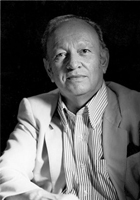

Derek Mahon Biography
Derek Mahon (born 23 November 1941) is a Northern Irish poet. He was born in Belfast, Northern Ireland.
Mahon was born the only child of Ulster Protestant working class parents. His father and grandfather worked at Harland and Wolff while his mother worked at a local flax mill. During his childhood, he claims he was something of a solitary dreamer, comfortable with his own company yet aware of the world around him. Interested in literature from an early age, he attended Skegoneill Primary school and then the Royal Belfast Academical Institution.
At Inst he encountered fellow students who shared his interest in literature and poetry. The school produced a magazine to which Mahon produced some of his early poems. According to the critic Hugh Haughton his early poems were highly fluent and extraordinary for a person so young.
I lie and imagine a first light gleam in the bay
After one more night of erosion and nearer the grave,
Then stand and gaze from the window at break of day
As a shearwater skims the ridge of an incoming wave;
...
They said I got away in a boat
And humbled me at the inquiry. I tell you
I sank as far that night as any
Hero. As I sat shivering on the dark water
...
Walking among my own this windy morning
In a tide of sunlight between shower and shower,
I resume my old conspiracy with the wet
...
The only reality is the perpetual flow of vital energy.
—Montale
Spindrift, crustacean patience
and a gust of ozone,
...
Surely you paused at this roadside oasis
In your nomadic youth, and saw the mound
Of never-used cement, the curious faces,
...


Delivering Poems Around The World
Poems are the property of their respective owners. All information has been reproduced here for educational and informational purposes to benefit site visitors, and is provided at no charge...
2/10/2026 6:12:39 AM # 1.0.0